
What Does Kava Taste Like? What to Expect From Your First Sip
What Does Kava Taste Like? What to Expect From Your First Sip
⭐ Quick answer — Kava tastes earthy, bitter, slightly peppery, and it leaves a mild, temporary numbing or tingling sensation on your tongue and lips. Most first-time drinkers compare it to strong…
| ⭐ Quick answer — Kava tastes earthy, bitter, slightly peppery, and it leaves a mild, temporary numbing or tingling sensation on your tongue and lips. |
Most first-time drinkers compare it to strong herbal teas or other botanical drinks with a distinct root-like flavor. If you are heading to a Kava bar for the first time wondering “what does kava taste like?”
This guide breaks down exactly what shapes that flavor, how Kava root, Kava tea, and modern Kava drinks differ in taste, why some batches taste more bitter than others, and what you can realistically do to make each sip easier to get through.
| 📌Key Takeaways 1. Kava’s flavor comes from earthy, bitter, and peppery notes, driven by the root’s natural kavalactone and starch content. 2. Kava root drink preparations taste stronger and more bitter than diluted teas or flavored modern Kava products. 3. The type of Kava (traditional, micronized, or instant) and the variety used both change how strong the bitterness comes through. 4. Chasers, mild flavor mixers, and proper straining reduce harshness without needing large amounts of added fat. |
What Does Kava Taste Like?
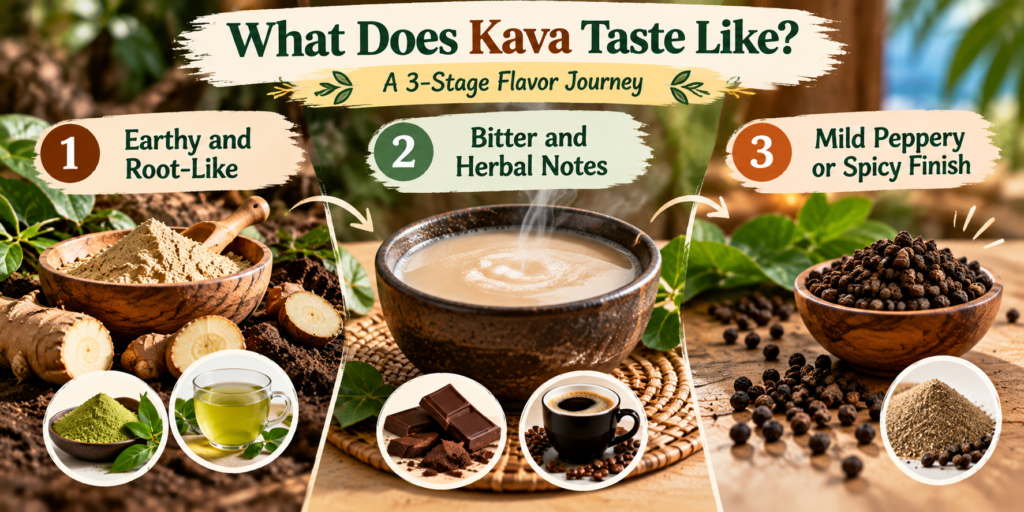
When you take a sip, the flavor hits your taste buds in three distinct waves:
👉Earthy and Root-Like Flavor
- The Profile: A deep earthy taste that creates the foundation of the drink.
- Sensory Experience: Kava tastes like a beverage made from natural roots grown in rich soil. Many first-time drinkers compare its flavor and slightly thick texture to “muddy water” or a strong herbal drink.
- Flavor Benchmarks: It shares similarities with ceremonial matcha or strongly brewed unsweetened green tea.
👉Bitter and Herbal Notes
- The Profile: A natural botanical bitterness that appears as you taste the drink.
- Sensory Experience: This bitterness comes from the plant itself and has a more natural herbal character rather than a sharp artificial taste.
- Flavor Benchmarks: Some people compare it to dark chocolate, unsweetened black coffee, or complex botanical tonics.
👉Mild Peppery or Spicy Notes
- The Profile: A light peppery finish that appears toward the end of each sip.
- Sensory Experience: Since kava belongs to the same plant family as black pepper (Piperaceae), it can have a mild spicy and dry note rather than a strong chili-like heat.
- The Finish: These subtle spicy notes help balance the earthy flavor and create a cleaner finish after drinking.
What Does Kava Root Drink Taste Like?
A Kava root drink made the traditional way, using ground or pounded root mixed with water, delivers the strongest and most concentrated version of Kava’s flavor.
- Expect a thick, slightly gritty texture alongside intense earthiness and bitterness, since nothing is added to soften the taste.
- This is the closest experience to how Kava has been consumed for generations in Pacific Island communities.
Why Does Kava Taste Like Dirt?
- Volcanic Soil: Roots absorb minerals from rich South Pacific soil over 3 to 5 years.
- No Natural Sugars: The beverage contains virtually no sweetness or fruit acids.
- Unfiltered Silt: Fine root particles give the drink an opaque color and chalky texture.
What Does Kava Tea Taste Like?
Kava tea shares the same core flavor notes as Kava root drink, but preparation method changes how intense those notes come through.
Traditional Kava Tea Flavor Profile
- Traditional Kava tea, strained from ground root steeped or squeezed in water, keeps most of the earthy and bitter character intact.
- It’s typically drunk quickly in a single shot rather than sipped, partly because the flavor doesn’t improve the longer it sits.
Modern Kava Drinks vs Traditional Kava Tea
To make kava enjoyable for everyday life, modern formats have completely changed the sensory experience.
| Feature | ☕Traditional Kava Tea | 🥤Modern Kava Drinks & Shots |
| Texture | Dense, chalky, and slightly gritty. | Smooth, crisp, water-thin, and clean. |
| Flavor | Intensely earthy, raw, and heavily bitter. | Balanced with natural botanicals, fruits, or mild sweetness. |
| Effort | Requires 10 to 15 minutes of hand-kneading. | Ready to drink instantly—just pop the cap. |
| Serving Temp | Room temperature (which highlights bitterness). | Best served ice-cold (which naturally hides bitter notes). |
Does Kava Taste Different Depending on the Type?
Yes. The processing method changes texture, strength, and how much bitterness comes through in each sip.
| Kava Type / Region | Primary Flavor Profile | Texture & Mouthfeel | Bitterness Level |
| Fijian Kava | Mild, creamy, and slightly sweet | Smooth and light | Low (Great for beginners) |
| Tongan Kava | Crisp, clean, and highly peppery | Water-thin and refreshing | Medium |
| Vanuatu Kava | Heavy, deeply smoky, and woody | Dense, thick, and gritty | High (Very intense) |
| Hawaiian Kava | Earthy with subtle nutty undertones | Creamy and smooth | Low to Medium |
Why Different Kava Products Have Different Flavors
If you walk into a kava bar or browse online shop shelves, you will notice that two products made from the exact same plant can taste like night and day.
This flavor variance comes down to three main factors:
✔️Noble vs Tudei Cultivars
- High-quality Noble kava is selected specifically for daily drinking because it has a clean, smooth, and predictable flavor.
- Non-export Tudei kava strains are notoriously harsh, intensely bitter, and leave a long-lasting chemical aftertaste.
✔️Root Harvesting (Lawena vs Waka)
- The kava plant has two types of roots. Lawena (the smooth basal root) produces a much lighter, milder, and easier-to-drink flavor.
- Waka (the dark lateral roots) contains a higher concentration of kavalactones, resulting in a much stronger, darker, and more pungent brew.
✔️Modern Processing vs Raw Powder
- Traditional medium-grind powders leave heavy silt in the liquid, keeping the flavor aggressively raw.
- Modern ready-to-drink options — like Kava Shots and carbonated seltzers—go through advanced filtration and botanical blending to isolate the relaxing properties while entirely removing the heavy, gritty taste.
What Should Beginners Expect From Their First Sip of Kava?
First-time drinkers usually describe the initial reaction as a mix of surprise and mild discomfort, followed by quicker acclimation than expected.
| ✔️A strong earthy, bitter first impression, often stronger than anticipated. ✔️A tongue-numbing or tingling sensation shortly after swallowing. ✔️An aftertaste that lingers briefly, similar to strong herbal tea. ✔️A texture that feels thicker or grittier than a typical beverage. |
Most beginners find the flavor easier to manage by the second or third sip, since the palate adjusts quickly to the bitterness.
What Do Reddit Users Say About Kava’s Taste?
Personal opinions on Kava vary widely, with some drinkers finding its flavor challenging and others developing an appreciation for it over time. Here’s what people have to say about Kava online:
- According to a Reddit user, Kava’s flavor can be difficult to pin down, with the discussion featuring earthy, bitter, and unusual comparisons that show how distinctive the drink can taste.
- In another Reddit discussion, a first-time drinker described Kava as “delicious,” offering a noticeably different experience from the common expectation that Kava’s natural flavor is unpleasant.
How Can You Make Kava Taste Better?
The most effective way to make kava taste better is to use a fat-soluble mixer or a strong chaser to mask its bitter, muddy flavor and smooth out its gritty texture. Because kavalactones (the active compounds) are fat-soluble, adding fats also helps maximize the drink’s effects.
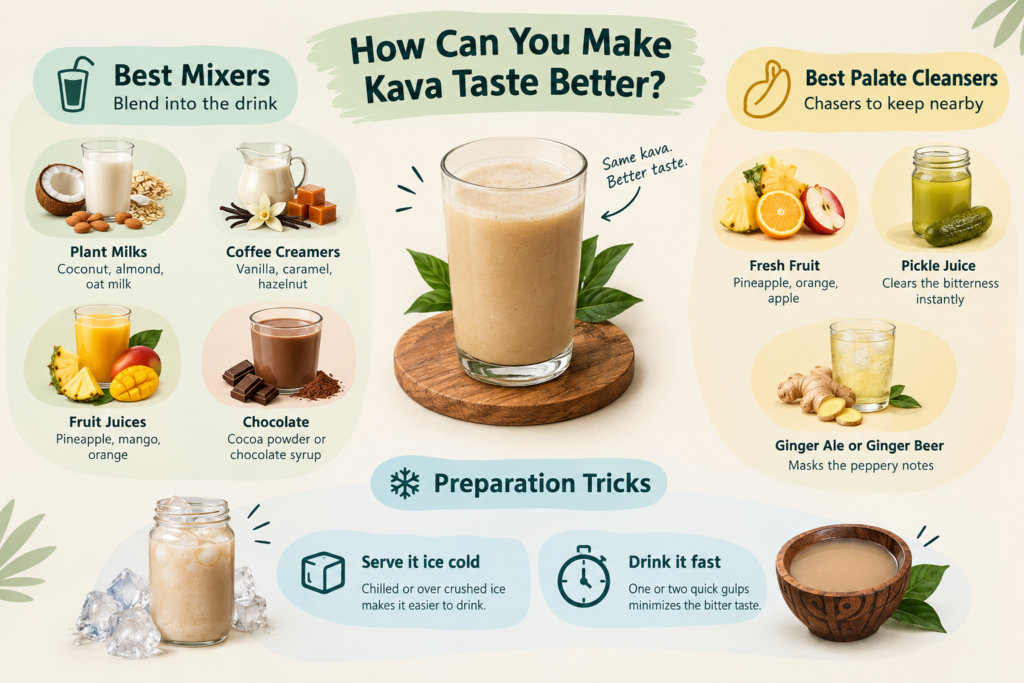
🥥 Best Mixers to Blending Into the Drink
Instead of using plain water, try replacing half or all of the liquid with these options:
- Plant Milks: Coconut milk, almond milk, and oat milk are highly effective. Coconut milk is traditionally favored because its naturally sweet, fatty profile rounds out the earthy bitterness.
- Coffee Creamers: Adding a splash of flavored creamer (like vanilla, caramel, or hazelnut) drastically changes the flavor profile and covers the raw potato-like taste.
- Fruit Juices: Pineapple juice, mango nectar, and orange juice provide a strong, acidic sweetness that cuts right through the peppery bite.
- Chocolate Nesquik or Cocoa: Cocoa powder or chocolate syrup completely alters the color and heavily masks the bitterness, making it taste more like a dark, earthy chocolate drink.
🍍 Best Palate Cleansers (Chasers)
If you prefer to brew kava traditionally with just water, keep a “chaser” nearby to consume immediately after your shell or cup:
| Fresh Fruit: A slice of pineapple, orange, or apple helps wash away the numbing sensation and lingering grit. Pickle Juice: A quick sip of pickle juice completely shocks the palate and clears the herbal bitterness instantly. Ginger Ale or Ginger Beer: The sharp ginger spice masks the peppery notes of the kava. |
🧊 Preparation Tricks
- Serve it ice cold: Warm or room-temperature kava accentuates the muddy flavor. Chilling it or serving it over crushed ice numbs your taste buds slightly, making it much easier to drink.
- Drink it fast: Kava is not meant to be sipped like a cocktail. Traditional users down the shell in one or two quick gulps to minimize contact with the taste buds.
FAQs About Kava Taste
Does Kava Taste Like Alcohol?
No. Kava has no alcoholic flavor. It tastes earthy and bitter, closer to strong herbal tea than any alcoholic beverage.
Can You Add Sugar To Kava?
Yes, though it only masks bitterness rather than removing it, and traditional preparations are typically consumed without sweeteners.
Why Does My Mouth Feel Numb After Drinking Kava?
The tongue and lip numbing sensation comes from kavalactones in the root and is a normal, expected part of the Kava-drinking experience.
Does Kava Smell Different From How It Tastes?
Kava’s aroma is typically described as earthy and peppery, closely matching its taste profile rather than contrasting with it.
Is Instant Kava Less Bitter Than Traditional Kava?
Generally yes, since instant Kava is processed differently and tends to deliver a milder flavor than pounded root preparations.
Does The Water Temperature Change Kava’s Taste?
Cold or room-temperature water is standard for Kava preparation, since heat can alter kavalactone extraction and shift the flavor profile.
Disclaimer: This article is for informational purposes only and discusses the general taste, flavor profile, and preparation differences of Kava. Kava products can vary in type, ingredients, and preparation, so individual experiences may differ.
Always follow the instructions provided with your specific product and consult a qualified healthcare professional if you have questions about Kava use. Avoid driving or operating machinery after consuming Kava.