
How Long Does Kava Stay in Your System? What to Know
How Long Does Kava Stay in Your System? What to Know
Kava typically stays in your system for 24 to 48 hours, though its active compounds, known as kavalactones, have an estimated half-life of approximately 9 hours. The exact window varies by person.…
Kava typically stays in your system for 24 to 48 hours, though its active compounds, known as kavalactones, have an estimated half-life of approximately 9 hours.
The exact window varies by person. Amount, product strength, metabolism, and liver function all change it.
✔️This guide covers what you came to check around “how long does kava stay in your system”:
- A quick timeline from first sip to full clearance
- How long the effects last and how long Kava takes to kick in
- What Kava’s half-life means
- How your body processes Kava
- What speeds up or slows down clearance
- Whether Kava shows up on a drug test
- Side effects and safety considerations
How Long Does Kava Stay in Your System?
Health agencies such as NSW Health report that Kava absorbs quickly and can remain in your system for 24 to 48 hours, as the body generally requires up to two days to fully eliminate its primary metabolites.
Kava Timeline at a Glance
| Phase | Timeline | Body Response |
| Onset | 15–45 mins | Initial mouth numbness and mild muscle relaxation begin |
| Peak | 1–2 hours | Maximum calm and stress relief. |
| Duration | 2–6 hours | Active psychological and physical effects gradually taper off |
| Half-Life | ~9 hours | The liver metabolizes the compounds, cutting the active blood level in half |
| Elimination | 24–48 hours | The system gradually clears Kava metabolites. |
How Long Do Kava Effects Last?
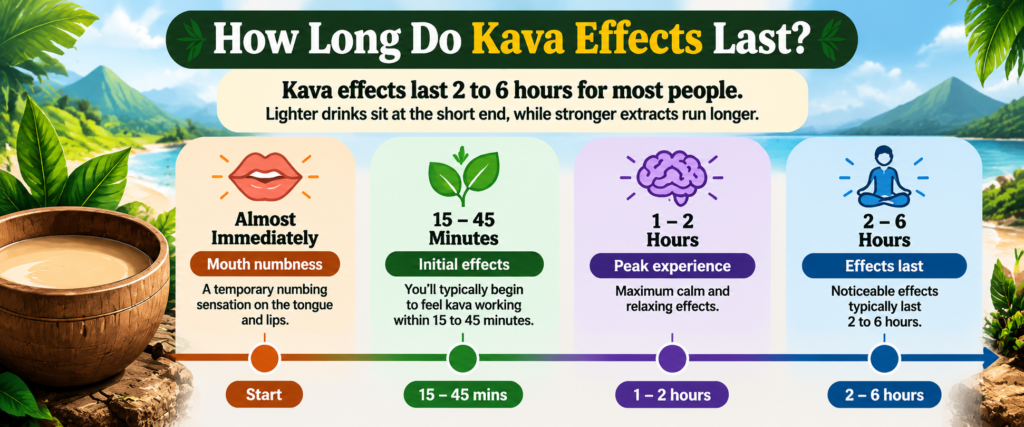
Kava effects last 2 to 6 hours for most people. Lighter drinks sit at the short end, while stronger extracts run longer.
However, feeling nothing does not mean the body has finished with it. Clearance takes much longer than the noticeable effects.
| 💡According to a recent research by NIH, Kava reaches peak plasma levels at around 2 hours, has an estimated half-life of about 9 hours, and its compounds are gradually eliminated through urine and feces. |
How Long Does It Take for Kava to Kick In?
- Initial Effects: You will typically feel kava begin to work within 15 to 45 minutes of ingestion.
- Mouth Numbness: A distinct, temporary numbing sensation on the tongue and lips occurs almost immediately due to local anesthetic properties.
- Peak Experience: The full therapeutic and relaxing impact peaks around the 1 to 2-hour mark as kavalactones successfully cross the blood-brain barrier.
Can You Still Feel Kava the Next Day?
- The Kava Afterglow: Yes, many users report feeling a subtle sense of calm, reduced stress, or deep relaxation the morning after consumption, often referred to as a “kava afterglow.”
- The “Tudei” Exception: Certain non-noble strains (known as “Tudei” or two-day kava) have a heavy chemical profile that can cause lingering lethargy, sluggishness, or a mild hangover effect the next day.
- Accumulation Effects: If you consume kava late in the evening, the 9-hour half-life means a significant percentage of kavalactones remain active in your bloodstream when you wake up.
| To lower the odds: 1. Choose a lighter serving in the evening. 2. Avoid stacking multiple servings close together. 3. Skip mixing Kava with alcohol. |
What Is Kava’s Half-Life?
The elimination half-life of kava’s primary active compounds — kavalactones — is approximately 9 hours. A substance’s half-life represents the time required for the body’s metabolic processes to reduce its plasma concentration by exactly 50%.
Because it takes roughly four to five half-lives for a compound to be considered clinically cleared from the human body, kava follows a highly predictable mathematical degradation schedule:
| 9 Hours: Blood concentration drops to 50% of the peak dose. 18 Hours: Concentration falls to 25%. 27 Hours: Concentration drops to 12.5%. 36 Hours: Concentration reduces to 6.25%. 45+ Hours: The remaining metabolites reach negligible levels (under 3%), signaling near-total elimination for a standard, single dose. |
How Does the Body Process and Eliminate Kava?
The body absorbs Kava quickly, and the liver does most of the work breaking it down.
The process runs in three steps:
- Absorption: Kavalactones enter the bloodstream shortly after you drink Kava.
- Breakdown: The liver metabolizes them.
- Elimination: The body clears the byproducts over the following day or two.
What Factors Affect How Long Kava Stays in Your System?
How long kava remains in your body depends on several unique lifestyle and biological factors.
Because everyone processes botanicals differently, these primary variables determine how fast your system flushes the compounds:
1. Amount Consumed and Frequency
- Dose Size: Drinking multiple servings at once floods your system with kavalactones, requiring much more time for your body to break them down.
- Usage Habits: Kava is fat-soluble. Regular or daily use causes the compounds to build up in your body’s fat tissues, drastically lengthening the total clearance time.
2. Kavalactone Content and Product Strength
- Strain Type: Traditional “Noble” kava leaves your system quickly, while cheap or impure “Tudei” strains can linger and cause sluggishness for up to two days.
- Product Form: Concentrated extracts, pills, and tinctures hit your system much harder and take longer to clear than traditionally strained kava root tea.
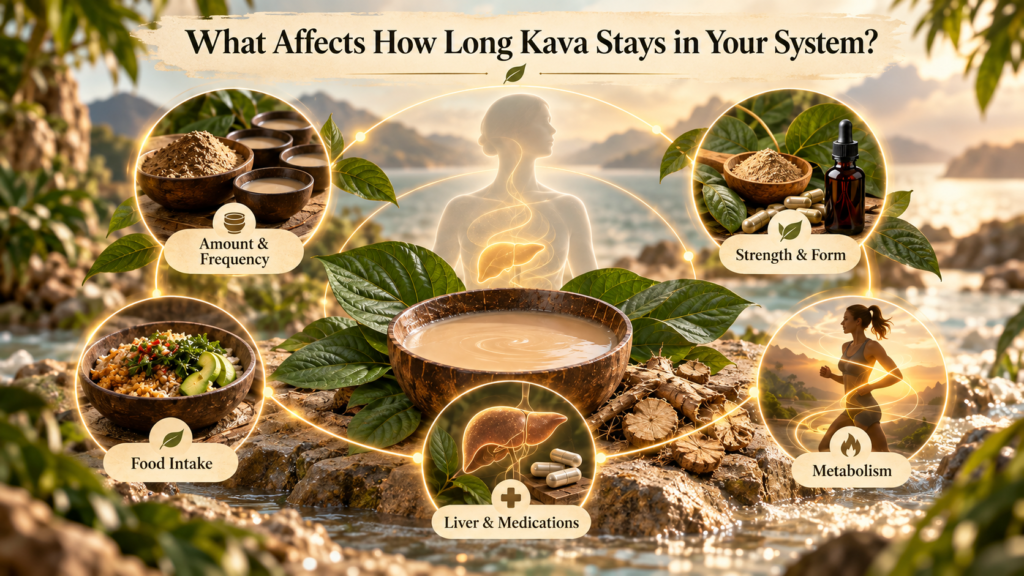
3. Individual Metabolism and Body Differences
- Body Fat: Because kava stores itself in fat, individuals with higher body fat percentages retain the compounds longer than leaner individuals.
- Age and Genetics: Younger adults typically process kava faster due to naturally higher metabolisms. Your genetic makeup also determines how efficiently your body breaks down foreign substances.
4. Liver Function and Medications
- Liver Health: Your liver helps process Kava using specific enzymes. If liver function is reduced, the body may take longer to break down and clear its compounds.
- Mixing Substances: Taking Kava with alcohol or certain medications can make processing more complicated because the liver may be handling multiple substances at the same time.
5. Food Intake
- Empty Stomach: Drinking kava without eating causes fast absorption and a quick peak, allowing your system to start flushing it out sooner.
- Fatty Meals: Consuming kava with a heavy meal delays absorption but can increase how much kava your body ultimately absorbs, stretching the processing timeline.
Does Kava Show Up on a Drug Test?
In most cases, no. Kava is not a controlled substance in the United States, so routine tests do not look for it.
Standard 5-Panel and 10-Panel Tests
Standard workplace tests screen for specific controlled substances such as opioids, cannabis, and amphetamines.
- 5-panel test: Does not include Kava.
- 10-panel test: Does not include Kava.
- Standard workplace screen: Does not include Kava.
Specialized and Forensic Testing
A lab can test for kavalactones if someone requests it. However, this is rare outside clinical or legal settings.
If a program or employer tests for herbal products, disclose your Kava use in advance.
Kava Side Effects and Safety Considerations
Kava suits many adults, but it carries real considerations. Understanding them helps you decide with confidence.
⚠️Short-Term Side Effects
Most side effects are mild and fade as the body clears Kava.
- Drowsiness
- Impaired coordination
- Numbness in the mouth
- Upset stomach or nausea
- Muscle relaxation
Furthermore, avoid driving or operating machinery until you feel fully alert.
Longer-Term and Liver-Related Concerns
Heavy or prolonged use has been linked to liver problems. The National Center for Complementary and Integrative Health reports cases of liver damage tied to kava products. The NIH LiverTox database also documents severe liver injury in rare cases.
Watch for these symptoms and seek medical care if they appear:
- Yellowing of the skin or eyes
- Dark urine
- Persistent fatigue
- Ongoing nausea
⚠️When Should You Be Extra Cautious With Kava?
Some situations call for a conversation with a healthcare professional first!
- You take prescription medications, especially sedatives or anti-anxiety drugs.
- You have a history of liver conditions.
- You drink alcohol regularly.
- You are pregnant or breastfeeding.
- You plan to drive or work with machinery.
Final word
Kava’s noticeable effects may fade within hours, while its compounds can remain in the body longer as they are processed and eliminated. The exact timeline varies from person to person, so estimates should be treated as general guidance rather than fixed rules.
The most important distinction is that feeling Kava wear off does not always mean it has fully cleared from your system.
FAQs
What Is Kava?
Kava is a traditional beverage made from the crushed roots of the Piper methysticum plant, native to the South Pacific islands.
What Does Kava Do To You?
Kava interacts with your central nervous system to induce a calm, relaxed state, soothe muscles, and reduce social anxiety. It can also cause a temporary numbing sensation on your lips and tongue and may induce mild drowsiness or euphoria.
Does Drinking Water Clear Kava Faster?
No, drinking excess water will not speed up how fast your liver metabolises kava. However, staying hydrated supports healthy kidney function, which helps your body efficiently flush out the water-soluble waste products through urine.
How Long Does Kava Stay In Your Urine?
For occasional users, kava metabolites typically remain detectable in urine for 24 to 48 hours after consumption. For chronic or heavy users, it can linger and stay detectable in urine for up to 4 days or longer.
Can You Drive After Drinking Kava?
It is highly recommended to avoid driving after drinking kava, as its sedating effects can slow your reaction times and impair motor coordination. Many regions legally treat kava impairment similarly to driving under the influence of alcohol or drugs.
Disclaimer: This article is for general educational purposes only and is not intended to provide medical advice or diagnose, treat, or prevent any condition. Kava may affect people differently and can interact with alcohol or certain medications.
If you have a medical condition, take medication, are pregnant or breastfeeding, or have concerns about using Kava, consult a qualified healthcare professional before use.