
How to Make Kava: A Complete Guide to Kava Preparation
How to Make Kava: A Complete Guide to Kava Preparation
To make Kava, place root powder in a strainer bag, add room-temperature or lukewarm water, and knead for about 10 minutes. Squeeze out the liquid, discard the pulp, and serve the drink…
To make Kava, place root powder in a strainer bag, add room-temperature or lukewarm water, and knead for about 10 minutes. Squeeze out the liquid, discard the pulp, and serve the drink fresh. Micronized and instant Kava: skip the kneading and mix straight into water.
Sounds simple, right? Once you start, though, questions pile up. Which water temperature works? What do you do without a strainer? What does the drink taste like? Additionally, every format follows its own rules, and mixing them up is the fastest way to a gritty, disappointing cup. So come along and learn “How to make kava?”
| 📌Key Takeaways 1. Traditional kava preparation involves mixing, kneading, and straining kava root powder before serving. 2. Instant and micronized kava offer simpler preparation methods with fewer steps. 3. Flavor additions, drink mixes, and proper storage can improve the overall experience. 4. Choosing the right preparation method depends on your preferred format, time, and convenience. |
What Do You Need to Make Kava?
Making kava does not require complicated equipment, but the tools you need depend on the type of kava you are preparing.
🎯 The basic ingredients to prepare a Kava mix include:
- Kava powder or product: Traditional kava is commonly prepared from dried root powder, while modern options include micronized and instant formats.
- Water: Water is the main liquid used for traditional preparation.
- Optional flavor additions: Some people add ingredients like fruit flavors or other beverages to adjust the taste.
The exact preparation method can vary depending on the product instructions.
⭐Tools Used for Traditional Preparation
Traditional preparation usually requires a few simple tools:
- Strainer Bag: A dedicated synthetic mesh bag with a 75 to 100-micron weave. If you don’t have one, a high-quality nut milk bag, clean nylon stocking, or a fine muslin cloth will work.
- Large Prep Bowl: A wide mixing bowl to give you plenty of room to submerge, knead, and press the bag without splashing.
- Serving Shells: Traditionally, it is served in coconut shells (bilos or tanoas), but any small cup or tumbler works perfectly.
⭐Modern Preparation Tools
- Shaker bottle with a strainer ball — It suits single servings and works best with finer powders.
- Blender — It handles larger batches. Pair it with a fine-mesh bag for straining.
- Cold brew jar with a mesh strainer — It suits hands-off preparation.
How to Make Kava? — Traditional Powder Method
Traditional preparation involves mixing ground root with water, kneading the mixture to extract the root material, and straining the liquid before serving.
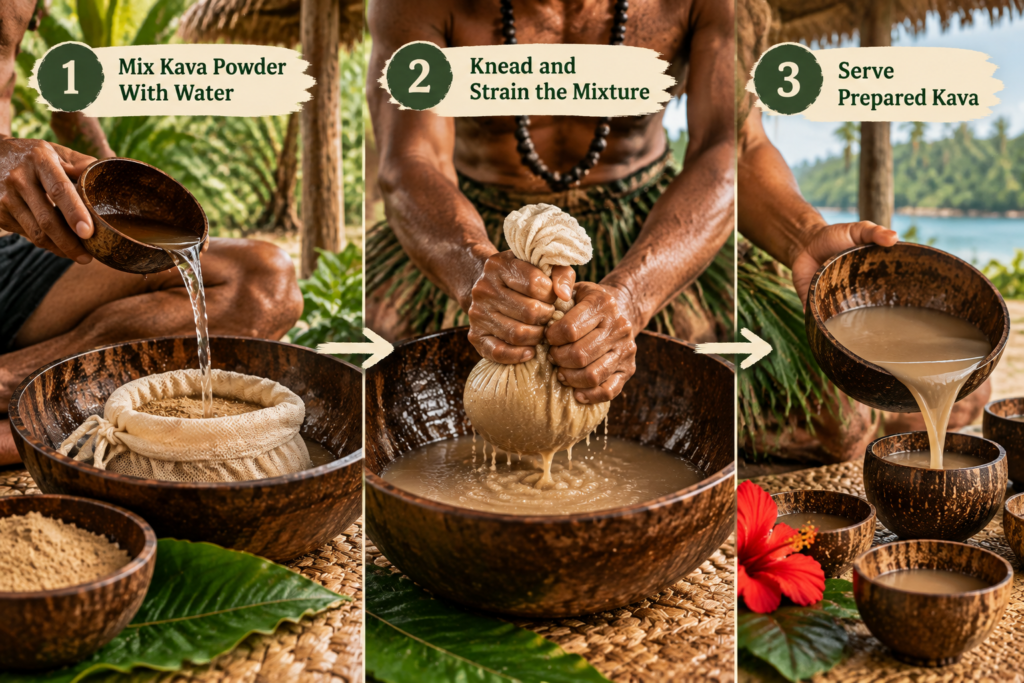
1. Mix Powder With Water
- Place the recommended amount of traditional-grind powder into a fine strainer bag and secure the top.
- Place the bag into a bowl and add the amount of water recommended by the product.
- Allow the powder to soak briefly so the root material becomes saturated.
2. Knead and Strain the Mixture
- Submerge the bag and knead, massage, and squeeze the kava in the water.
- Continue working the mixture according to the preparation instructions for your specific variety.
- Lift the bag from the bowl and gently squeeze out the remaining liquid.
- Remove the strained root material from the prepared beverage.
3. Serve Prepared Mix
- Stir the prepared mixture before serving to redistribute any settled material.
- Pour it into a cup or traditional serving vessel.
- Serve fresh!
How to Make Kava Tea From Powder
To make a standard cup, you must manually extract the active ingredients using warm water rather than brewing it like standard herbal tea.
- Step 1: Bag It: Place 2 to 4 tablespoons of medium-grind powder in a fine-mesh strainer bag and tie the top tightly.
- Step 2: Steep It: Set the bag into a bowl, pour in 8 ounces of warm water (40°C–50°C), and let it sit for 5 minutes to soften the root fibers.
- Step 3: Knead It: Submerge the bag and firmly massage, squeeze, and press it against the bowl for 10 to 15 minutes until the water turns muddy brown and feels oily.
- Step 4: Wring & Serve: Twist the bag hard to press out the remaining liquid, stir the bowl to mix the sediment, and gulp it down quickly.
Can You Brew Kava Like Regular Tea?
No, you cannot brew kava like regular tea. Boiling water destroys the active relaxing compounds, and steeping the root without kneading leaves you with a weak, ineffective drink.
Unlike tea leaves, kava requires physical friction to release its active ingredients.
Why Kava Isn’t Like Tea?
| Feature | Regular Tea | Kava Root Powder |
| Active Compounds | Water-soluble (dissolves easily in water) | Fat-soluble & resinous (needs force to separate) |
| Temperature | Boiling water (90°C–100°C) is ideal | Warm water (40°C–50°C); boiling water destroys effects |
| Preparation | Passive steeping | Active hand-kneading or blending |
| Texture | Clear, thin liquid | Opaque, dense, and muddy |
How to Prepare Micronized Kava
Micronized preparation suits people who want less work than kneading but still want to drink the whole root.
What Is Micronized Kava?
Micronized Kava is Kava root ground to an extremely fine powder. Because the grind is so fine, it mixes straight into water without a strainer bag. However, you drink the root particles too, so the texture is grittier than strained preparation.
Micronized Preparation Method
- Measure about 10 grams (roughly 2 tablespoons) of micronized powder. Follow your product label if it says otherwise.
- Add the powder and 200 mL (about ¾ cup) of lukewarm water to a shaker bottle.
- Shake for 1 or 2 minutes until the powder disperses.
- Let the mixture rest for up to 15 minutes if it feels gritty.
- Strain through a fine mesh if you want a smoother cup. This step is optional.
- Stir or shake again before drinking, because the powder settles fast.
How to Make Instant Kava
Instant Kava is the fastest route from jar to glass. Some retailers use “instant” and “micronized” interchangeably, but the two products are different.
What Is Instant Kava?
Instant Kava is a pre-extracted Kava drink. Producers steep the root in water, remove the fiber, and dehydrate the liquid into a fine powder. The powder dissolves in water, so you don’t need a bag, bowl, or kneading.
Instant Preparation Steps
- Add about 8 grams (one heaped teaspoon) of instant Kava to a glass. Follow the label for exact amounts.
- Pour in 200 to 250 mL (about 1 cup) of cold or room-temperature water.
- Stir for 10 to 30 seconds until it dissolves.
- Drink right away, or stir again if you sip slowly and the powder settles.
How To Make Kava Without Strainer
No bag on hand? You still have options, and none of them require a special purchase.
Does Kava Need to Be Strained?
Yes, traditional preparation made from root powder is usually strained to separate the plant material from the prepared drink. However, formats like instant or micronized kava may not require the same straining process.
| Substitute | How to Use It | Result |
| Nut milk bag or muslin | Works like a Kava bag | Smoothest cup of the group |
| Nylon stocking or knee-high | Double it up and tie the end | Filters finely and holds up to hard kneading |
| Clean cotton T-shirt | Use one layer, and tie it into a sack | Filters well, but the fabric holds some liquid |
| Cheesecloth | Fold it several times before tying | Lets more sediment through |
| Blender plus fine-mesh kitchen sieve | Blend first, then press through the sieve | Slower, and the drink comes out thinner |
| Aeropress with a metal filter | Blend the powder first, then press | Works, but extraction is less complete |
Whichever fabric you pick, wash it beforehand. In addition, use a single layer when you can, because the liquid gets trapped between fabric layers.
How To Make Kava Drink Taste Good
Kava has an acquired taste. Fortunately, a few small moves make it much easier to enjoy.
Here’s how to make your drink taste better
⭐Ways to Improve Kava Flavor
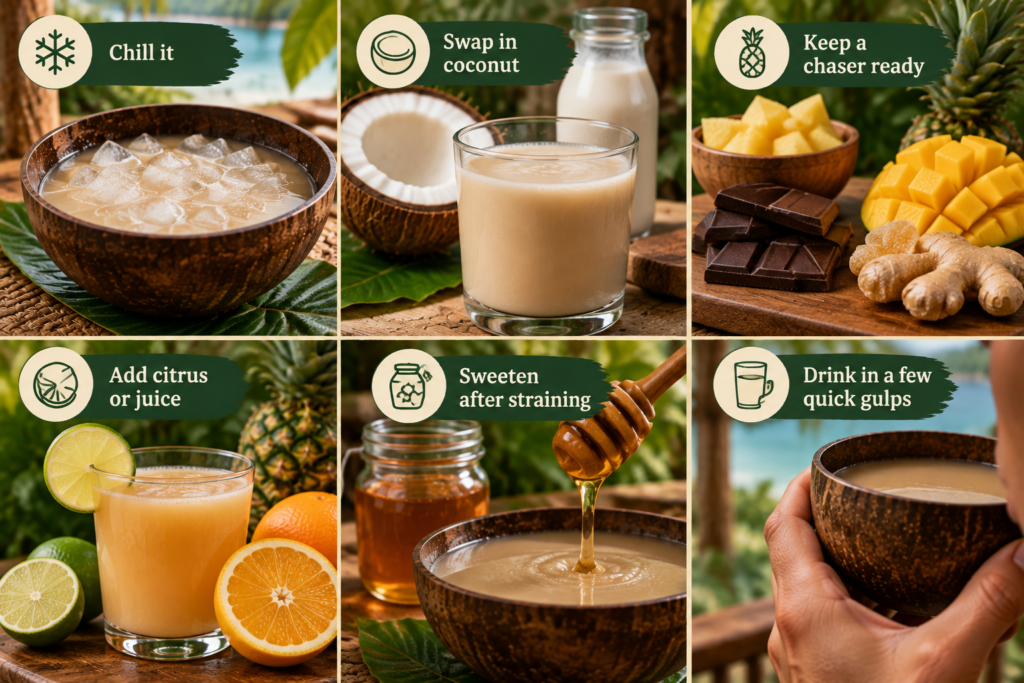
- Chill it — Cold Kava tastes smoother than room-temperature one. Refrigerate it or pour it over ice.
- Swap in coconut — Replace part of the water with coconut milk or coconut water for creaminess.
- Keep a chaser ready — Try pineapple, mango, dark chocolate, or ginger candy right after you drink.
- Add citrus or juice — Lime, lemon, pineapple, or orange cuts the earthy edge.
- Sweeten after straining — Stir in honey or agave once the liquid is done.
- Drink it in a few quick gulps — Sipping stretches the flavor out.
Why Does Kava Taste Earthy?
Kava is a root, and it tastes like one. Expect earthy, woody, slightly peppery, and bitter notes. The texture is thicker than water and can feel slightly oily. Most first-timers wince, but many people grow to like the flavor over a few sessions.
Kava Drink Recipes and Mixes You Can Try
Whether you prefer creamy, spicy, or fruity flavors, these kava recipes offer simple ways to mix kava into different drinks at home.
1. Coconut Chocolate Kava (The Crowd Pleaser)
- Best For: Masking the bitter, earthy taste of kava with rich flavors.
- Ingredients: 1 cup strained kava liquid, 1/2 cup coconut milk, 1 tbsp chocolate syrup, and a dash of cinnamon.
- How to Mix: Stir or shake all ingredients together with ice until chilled, then serve immediately.
2. Honey Ginger Kava Crisp (The Spicy Palate Cleanser)
- Best For: Cutting through the muddy texture and soothing the stomach.
- Ingredients: 1 cup strained liquid, 1 tbsp honey, 1/2 tsp freshly grated ginger (or ginger juice), and a squeeze of fresh lime.
- How to Mix: Whisk the honey into warm prepared liquid until dissolved, add the ginger and lime, and pour over ice.
3. Tropical Kava Colada (The Fruit Blend)
- Best For: A refreshing, sweet flavor that complements kava’s natural oiliness.
- Ingredients: 1 cup strained kava liquid, 1/4 cup pineapple juice, 1/4 cup coconut cream, and a squeeze of orange juice.
- How to Mix: Combine all ingredients in a shaker bottle with crushed ice, shake vigorously, and serve.
Which Kava Preparation Method Is Right for You?
Each preparation method differs in effort, preparation time, convenience, and the resulting brew, so this comparison can help you choose the approach that fits your preferences.
| Method | Best For | Effort & Time | Final Brew Quality |
| Traditional Kneading | Purists who want the strongest, most authentic effects without digestive upset. | High (15 mins manual kneading) | Excellent: Maximizes potency and removes all raw plant fiber. |
| AluBall Shaker | Busy beginners looking for a quick, mess-free single serving on the go. | Low (1 min shaking) | Good: Decent potency, highly convenient, but extracts less than manual kneading. |
| Blender Method | Hosts preparing large batches for groups without doing manual labor. | Medium (5 mins blending + quick straining) | Very Good: High extraction rate, though you must still strain it through a bag. |
| Instant Kava | Minimalists who want zero prep, zero clean-up, and no straining gear. | None (Stir and drink) | Good: Consistent and fast, but generally more expensive per serving |
How to Store Kava? Best Tips and Tricks
Keep your kava fresh and potent by following these storage guidelines for both powder and liquid forms.
🌿Storing Kava Powder (Unprepared)
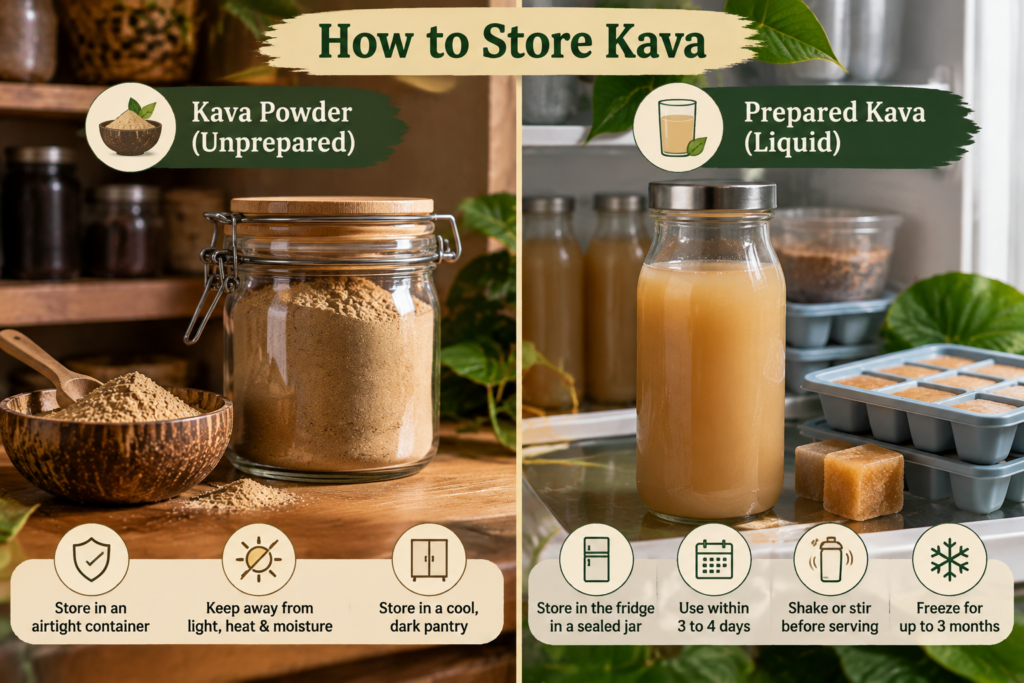
- Environment: Keep raw powder in an airtight container away from light, heat, and moisture.
- Location: A cool, dark pantry or kitchen cupboard is ideal.
- Shelf Life: Properly stored medium-grind powder stays fresh for 12 to 24 months. Do not refrigerate dry powder, as condensation can introduce moisture and cause mold.
🥤Storing Prepared Kava (Liquid)
- Refrigeration: Pour your strained liquid into a sealed glass jar or bottle and refrigerate immediately.
- Shelf Life: Consume chilled kava within 3 to 4 days before it spoils.
- Serving: The liquid will naturally separate as it sits. Shake or stir the bottle vigorously right before serving to blend the settled sediment back in.
- Freezing: For long-term liquid storage, freeze your prepared batch in silicone molds or freezer-safe bags for up to 3 months. Thaw it completely in the fridge and shake well before drinking.
Common Mistakes to Avoid When Making Kava
Making kava is simple once you understand the basics, but a few small mistakes can affect the final drink.
Here are some common ones to avoid:
❌ Using the wrong preparation method?
Check your kava format first — traditional powder, micronized, and instant kava each require a different approach.
❌ Skipping the straining step?
Traditional powder usually needs proper filtration to separate plant material.
❌ Not mixing enough?
Give the mixture enough time and effort to combine properly.
❌ Using boiling water?
Stick to the preparation instructions provided with your product.
❌ Adding too many flavors at once?
Start simple and adjust flavors gradually to find a mix you enjoy.
❌ Preparing more than you need?
Freshly prepared kava is generally preferred over storing large batches.
| 💡 For additional preparation tips and community-shared techniques, you can also explore this Reddit discussion on making a smoother and stronger kava preparation using traditional methods. |
FAQs
What Is The Ideal Water-To-Kava Powder Ratio?
Use 2 to 4 tablespoons of powder for every 8 ounces (1 cup) of warm water. This creates a balanced, effective single serving that you can adjust later based on your preference.
How To Make Kava Strong?
Add a splash of coconut milk or whole milk to your water, as fats help extract more of the active relaxing compounds. You can also increase the kneading time to 15 minutes or simply add an extra tablespoon of powder.
Can You Reuse Root Powder For A Second Batch?
Yes, you can do a “second wash” by kneading the used bag in a fresh bowl of warm water. The second batch will be lighter and less potent, but it still contains functional relaxing effects.
How Long Does Prepared Kava Last?
Freshly strained kava lasts for 3 to 4 days when stored in a sealed container in the refrigerator. The mixture will naturally separate as it sits, so just give it a vigorous stir or shake right before drinking.
Can I Make Kava With Hot Water?
You can use warm water, but never use boiling or scorching hot water, as extreme heat destroys the relaxing compounds. Keep the temperature under 50°C to protect the quality and potency of your brew.
How Long Should I Knead Kava?
Knead and massage the strainer bag firmly for 10 to 15 minutes. You will know it is ready when the water turns completely muddy brown, and the outside of the bag feels slick and oily.
Can I Make Kava Without Kava Whisk?
Yes, you don’t need a whisk because traditional kava is made by hand-kneading the powder inside a mesh strainer bag. For a tool-free option, stir the powder directly into a cup with a regular spoon.
Disclaimer: This guide is for informational purposes only and covers general kava preparation methods. Always follow the instructions provided by your product manufacturer, as preparation methods may vary between formats. If you have any health concerns, are taking medications, or are unsure about using products, consult a qualified healthcare professional.