
What Is Kava Drink? Exploring the Traditional Beverage from the Pacific Islands
What Is Kava Drink? Exploring the Traditional Beverage from the Pacific Islands
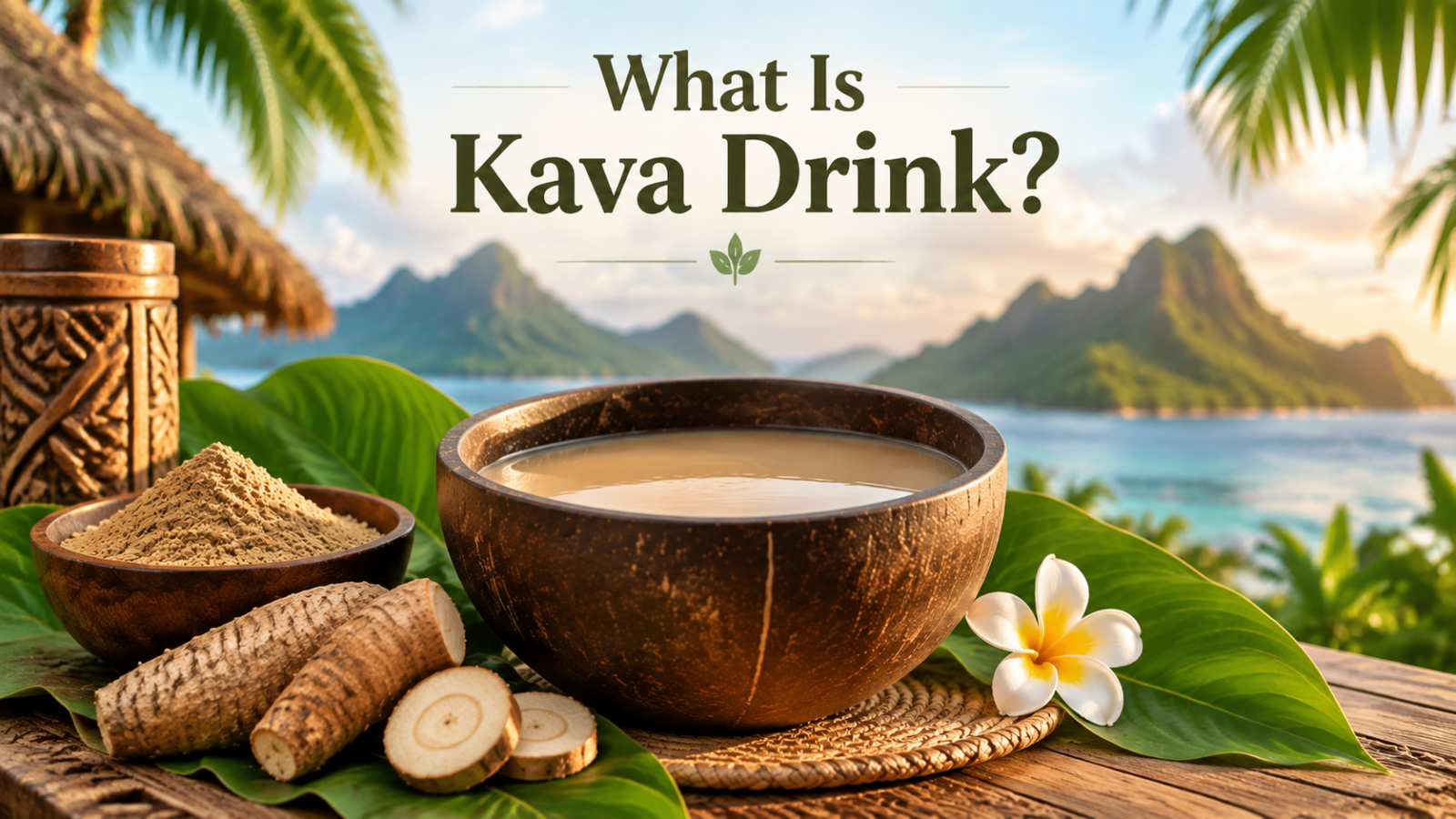
A Kava drink is a traditional beverage made from the ground root of the Kava plant, a tropical plant native to the Pacific Islands. It has been prepared and shared for centuries…
A Kava drink is a traditional beverage made from the ground root of the Kava plant, a tropical plant native to the Pacific Islands. It has been prepared and shared for centuries during cultural ceremonial gatherings across the region. Today, Kava drinks are available in traditional preparations as well as modern formats, including ready-to-drink beverages and other packaged options.
But even with its widespread popularity, many people still find themselves asking “what is Kava drink?” and wanting to understand how this traditional beverage is prepared. For Kava enthusiasts and beginners alike, this guide explores different Kava preparations, and traditions behind this long-standing Pacific Island beverage.
| 📌 Key Takeaways Kava drink is a traditional Pacific Island beverage made from the root of the Kava plant and has been part of cultural gatherings for centuries. Traditional preparation starts with the Kava root, which is cleaned, dried, ground, mixed with water, kneaded, and strained before serving. Modern Kava drinks come in different formats, including brewed Kava, instant powders, micronized options, and ready-to-drink beverages. Understanding the ingredients, preparation methods, and drink types can help you better appreciate how this traditional beverage has evolved today. |
What Is a Kava Drink?
A Kava drink is a beverage made from the root of the Kava plant, scientifically known as Piper methysticum. Traditionally consumed throughout the Pacific Islands, Kava has been part of cultural ceremonies, social gatherings, and community traditions for generations.
| What You’ll Learn? | 💡 |
| What is Kava drink is and where it comes from | ✔️ |
| What Kava drinks are made from | ✔️ |
| How traditional and modern Kava drinks are prepared | ✔️ |
| Different types of Kava drinks available today | ✔️ |
| What Kava drinks typically taste like | ✔️ |
| Tips for choosing the right Kava drink | ✔️ |
Understanding Kava as a Traditional Root Beverage
Kava is not brewed like tea or fermented like alcohol. It is a water-based extraction. The active compounds in the root, called kavalactones, dissolve into the water as the ground root is kneaded and strained, giving Kava its distinct effects without any fermentation or added alcohol.
Where Does Kava Drink Come From?
The Pacific Islands are home to Kava, where communities have used it for centuries as part of cultural and ceremonial practices
🌴 Countries and regions traditionally associated with Kava include:
- Fiji
- Vanuatu
- Tonga
- Samoa
- Hawaii
Different island communities developed their own preparation styles and traditions surrounding Kava. In many Pacific cultures, sharing Kava represents hospitality, respect, and social connection.
Today, people around the world enjoy Kava beyond its Pacific Island origins, with modern versions appearing in specialty beverage spaces, Kava bars, and botanical drink markets.
Why Kava Holds Cultural Importance in the Pacific Islands
Kava has played an important role in Pacific Island societies for generations. While modern consumers may discover Kava as a botanical beverage, its historical importance extends far beyond being a beverage.
Kava in Traditional Ceremonies and Social Gatherings
Kava plays a central role in many ceremonies, including marriages, funerals, healing ceremonies, naming ceremonies, and initiations for young people, and in Fiji it carries a symbolic function of bringing two groups of people together.
In Fiji, people traditionally serve the drink in a coconut shell bowl called a bilo, while communities use a large carved bowl known as a tanoa to hold prepared Kava for group gatherings.
| 💡 Did you know? In Fiji, receiving Kava with both hands and clapping before drinking are gestures of respect still practiced in formal ceremonies today. |
How Kava Became Popular Beyond the Pacific Islands
Over time, interest in Kava expanded beyond its traditional regions. Several factors contributed to its growing global presence:
- Increased interest in traditional botanical beverages.
- Growth of Kava bars outside the Pacific Islands.
- Availability of packaged Kava products.
- Interest in cultural beverages with historical backgrounds.
What Is Kava Drink Made From?
A Kava drink starts with one primary ingredient: the Kava root. However, modern versions may include additional ingredients depending on the product format and preparation style.
Understanding what goes into the drink helps explain why different products can look, taste, and feel different from one another.
🌿The Kava Root: The Main Ingredient Behind the Beverage
Traditional Kava makers use only the plant’s root and rhizome during preparation, as these parts contain concentrated kavalactones. Producers typically select mature root material instead of using stems or leaves.
| 🥤What Is In Kava Drink? — Ingredients And Formulation 1. Ground, pounded, or powdered Kava root. 2. Cold or room temperature water. 3. Optional coconut milk or oil, traditionally used to help extract and carry kavalactones. 4. No alcohol, sugar, or artificial additives in traditional preparations. |
How Is Traditional Kava Drink Prepared?
Traditional Kava preparation is a process that has been passed down through Pacific Island communities. While modern products provide convenience, traditional preparation focuses on extracting the root using simple methods.
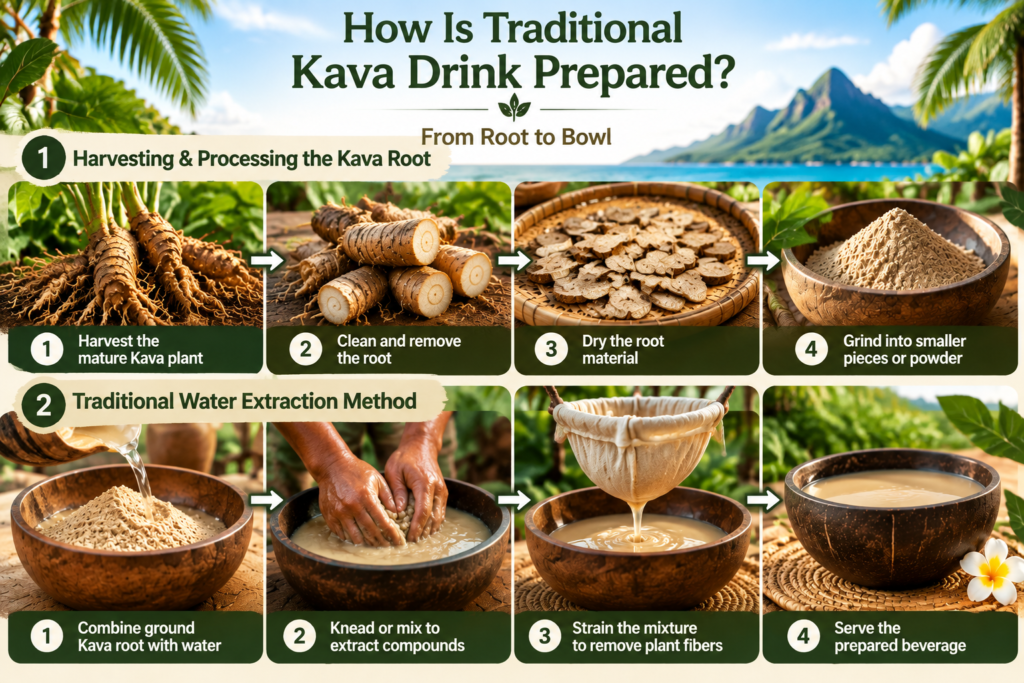
⭐Harvesting and Processing the Kava Root
The preparation process begins with harvesting the mature Kava plant.
Traditional processing usually includes:
- Removing and cleaning the root
- Drying the root material
- Grinding it into smaller pieces or powder
The processed root is then ready for extraction.
🧪Traditional Water Extraction Method
Traditional Kava is commonly prepared by mixing processed Kava root with water.
| The general process involves: 1. Combining ground Kava root with water 2. Kneading or mixing the material to extract compounds from the root 3. Straining the mixture to remove plant fibers 4. Serving the prepared beverage |
What Does a Kava Drink Taste Like?
Taste is one of the most talked about aspects of trying Kava for the first time, and it rarely matches people’s expectations.
Traditional Kava Flavor Profile
Traditional Kava contains a strong, natural taste that comes from its root-based ingredients
Common characteristics include:
- Earthy and plant-like notes
- Slight bitterness
- Peppery or spicy undertones
- A mild numbing sensation on the tongue
Why Modern Kava Drinks Taste Different
Many modern Kava products add fruit flavors, sweeteners, or carbonation to mask the natural bitterness. Manufacturers often create micronized powders and ready-to-drink formats to make Kava more approachable for newcomers who may find the traditional taste challenging.
Different Types of Kava Drinks Available Today
Kava has evolved well beyond the traditional bowl, with several formats now available depending on convenience and preference.
1. Traditional Brewed Kava
Traditional Kava makers knead ground roots in water and strain the mixture by hand, creating a preparation method that closely follows centuries-old practices.
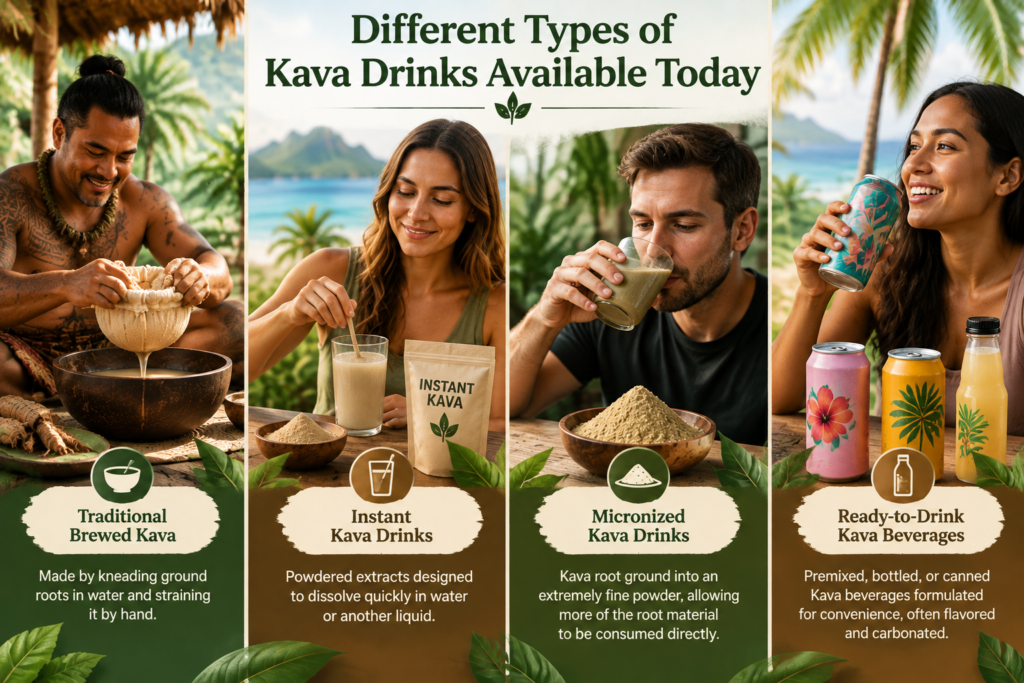
2. Instant Kava Drinks
Powdered extracts designed to dissolve quickly in water or another liquid, skipping the straining process entirely for faster preparation.
3. Micronized Kava Drinks
Manufacturers grind Kava root into an extremely fine powder to create micronized Kava, a format that uses more of the root material than traditional water extraction.
4. Ready-to-Beverages
Premixed, bottled, or canned Kava beverages formulated for convenience, often flavored and carbonated to appeal to a broader, non-traditional audience.
Know more on what FDA says about Kava before you choose any format.
Kava Drink Effects: What People Commonly Experience
The experience of drinking Kava can differ depending on factors such as the type of Kava used, preparation method, beverage concentration, and individual differences.
Common Effects Associated With Kava Drinks
- A sense of calm and reduced tension (NIH)
- Increased ease in social settings (Healthline)
- Mild numbing of the mouth and tongue (Drug Enforcement Administration)
- Muscle relaxation, especially with stronger preparations (NCCIH)
- No Kava hangover the next day when consumed in moderation
Factors That Influence Individual Experiences
- The Kava variety and its kavalactone ratio
- How strong the preparation is
- Whether it is consumed on an empty or full stomach
- Individual tolerance and body weight
- How much is consumed in a single sitting
How to Choose the Best Kava Drink
With so many formats and brands available, a few checks can help separate quality Kava from lower-grade products.
Step 1 — Check the Type and Quality of Kava Used
Look for noble Kava varieties, which are grown for a full maturation period and have a longer history of traditional, everyday use compared to faster-growing tudei varieties.
Step 2 — Review Drink Ingredients and Product Transparency
✔️Confirm the product lists root-only Kava, not stem or leaf material
✔️Check for third-party lab testing of kavalactone content
✔️Avoid products with vague or undisclosed sourcing
Step 3 — What to Look for in Kava Drink Reviews
- Consistency of effects across multiple batches
- Honest mentions of taste, not just marketing language
- Clear sourcing information, including growing region
- Feedback on how the product compares to traditional preparation
Frequently Asked Questions
1. What Is Kava Root Drink?
A Kava root drink is a traditional beverage prepared using the underground root of the Piper methysticum plant. The root is typically processed into a usable form and combined with water to create a drink that has been consumed in Pacific Island communities for generations as part of cultural and social traditions.
2. What Is Kava Kratom Drink?
A Kava Kratom drink is a beverage that combines Kava and Kratom in the same formulation. While Kava is made from the root of the Piper methysticum plant, Kratom comes from the leaves of the Mitragyna speciosa tree, making these blended drinks different from traditional Kava beverages.
Know more on what the PubMed Central says about Kratom and Kava.
3. What Is The Best Kava Drink?
The best Kava drink depends on your preferences and intended use. When comparing products, look for those made with high-quality Kava, transparent ingredient lists, and clear information about the Kava source and preparation method.
4. What Is The Strongest Kava Drink?
The strength of a Kava drink is influenced by factors such as the Kava variety, kavalactone concentration, and extraction method. Instead of choosing the strongest option, compare products based on their ingredient quality, formulation, and product transparency.
5. How Long Does Kava Last?
The primary Kava effects of a drink typically last between 1 to 3 hours. The duration can vary depending on the type of Kava, preparation method, and the individual. Many people report that the characteristics of the drink are noticeable for a few hours.
6. Can I drink Kava as a beginner?
Yes, beginners can explore Kava drinks by first understanding the type of Kava, ingredients, and preparation method. Starting with a well-labeled product and following the manufacturer’s directions can help new users become familiar with this traditional beverage.
7. How To Store Kava Drink?
Store freshly brewed kava drink in an airtight container in the refrigerator for up to 3 to 7 days, or freeze it for up to 3 months; shake vigorously before serving as the sediment settles.
8.Where Can I Buy Kava Drink Near Me?
You can find Kava drinks at specialty Kava bars, botanical beverage shops, health stores, and some grocery retailers. They are also available from reputable online Kava brands and retailers.
9. Can I Drink Kava Everyday?
Yes, moderate daily consumption of pure water-extracted noble kava is generally considered safe, but drinking it daily long-term can lead to dry, flaky skin (kava dermopathy) and potential liver strain if overconsumed or mixed with prescription medications.
10. Can I Make Kava Drink At Home?
Yes. Traditional Kava drink can be made at home by mixing ground Kava root with water, kneading the mixture to extract its compounds, and straining it to remove the plant material before serving.
Disclaimer: This article is for informational and educational purposes only and is not intended as medical advice. Kava has a long history of traditional use in Pacific Island cultures, but individual experiences may vary.
If you have existing health conditions, take medications, or have questions about whether Kava is suitable for you, consult a qualified healthcare professional before use.