
Alcohol and Kava Shot: Can You Take Them Together?
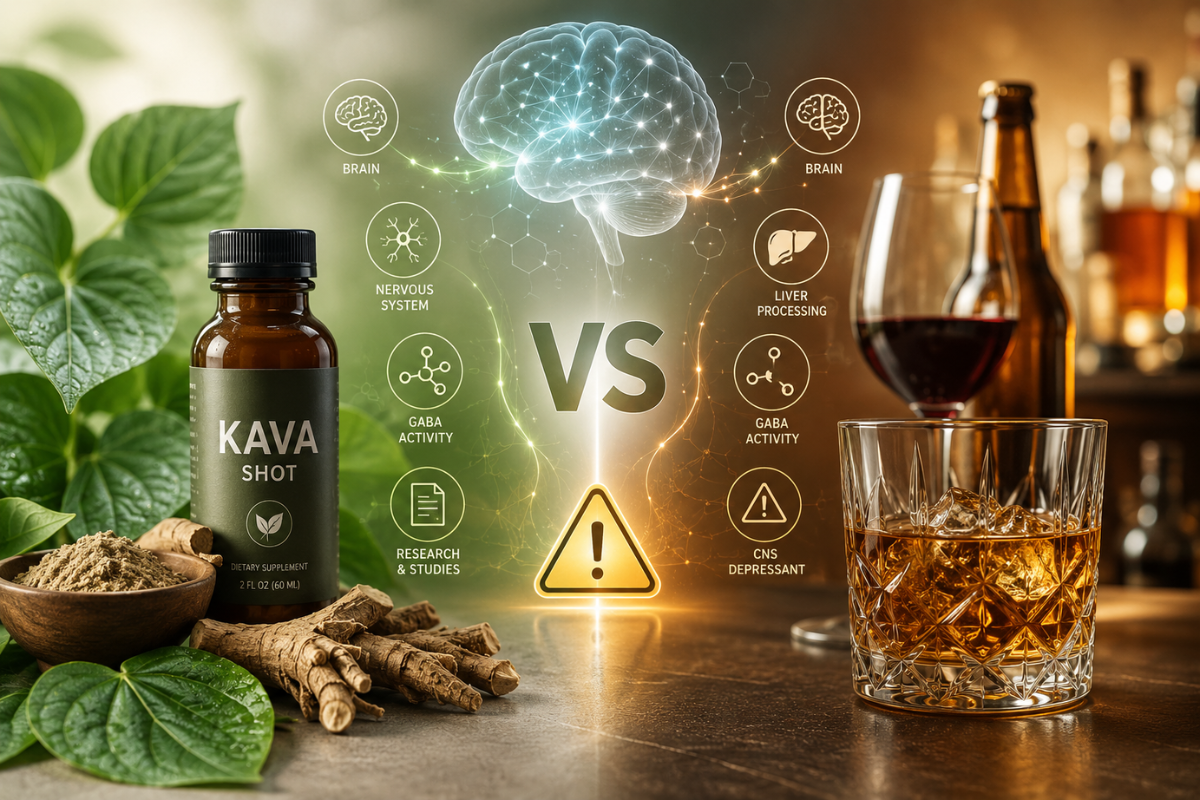
Alcohol and Kava Shot: Can You Take Them Together?
Kava has gained attention as a plant-based beverage with a long cultural history and a growing presence in modern drink categories. Alcohol remains a familiar beverage that has been part of social…
Kava has gained attention as a plant-based beverage with a long cultural history and a growing presence in modern drink categories. Alcohol remains a familiar beverage that has been part of social traditions worldwide for centuries. As interest in Kava shots and alcohol alternatives continues to grow, many people are curious about how these two beverages compare and whether they can be combined.
Understanding the science behind Kava and alcohol, and what researchers currently know about combining them, can help provide a clearer picture of this increasingly discussed topic. In this guide, we’ll separate myths from scientific evidence and explore more on topics such as — “Can you mix Kava and alcohol?”
Can You Mix Kava and Alcohol?
💡 Short answer: No, it is generally not recommended to mix Kava and alcohol.
Although research specifically examining mixing alcohol and Kava is still limited, health authorities and medical references advise against combining them because both can influence the Central Nervous System (CNS).
What Is Kava? Understanding the Plant Behind Kava Shots
Before comparing Kava shots with alcohol, let’s first understand what Kava actually is.
Kava comes from the roots of Piper methysticum, a plant native to several Pacific Island nations, including Fiji, Vanuatu, Tonga, and Samoa. Traditionally, communities have prepared kava beverages by grinding or pounding the root and blending it with water for ceremonial and social occasions.
The plant naturally contains a group of compounds known as Kavalactones, which researchers believe are primarily responsible for its biological activity.
What Are Kava Shots?
Kava shots are concentrated liquid supplements made from the root of the Piper methysticum plant. These products typically contain concentrated Kava extracts in a small, ready-to-drink bottle, making them more portable than traditional preparations.
Alcohol vs Kava Shots: How Are They Different?
📌 Let’s first see a quick difference between Kava shots vs alcohol:
| Features | Kava Shots | Alcohol |
| Primary Source | Piper methysticum (Kava root) | Fermented or distilled grains, fruits, or sugars |
| Main Active Compound | Kavalactones | Ethanol |
| Primary Mechanism | Interacts with multiple brain signaling pathways, including GABA-related activity | Depresses the central nervous system by enhancing GABA activity and reducing glutamate signaling |
| Beverage Category | Botanical, non-alcoholic beverage | Alcoholic beverage |
| Addiction Risk | Current evidence suggests a lower risk of dependence compared with alcohol, though research is ongoing | Well-established risk of alcohol use disorder and dependence |
Why Are Kava and Alcohol Frequently Compared?
Rather than sharing the same ingredients or production methods, alcohol and Kava are often compared because of changing consumer habits.
⚡ Some of the reasons include:
- Growing demand for alcohol-free beverages.
- Increasing popularity of botanical wellness drinks.
- More people participating in alcohol-free challenges, such as Dry January.
- Wider availability of ready-to-drink Kava products and Kava shots.
- Consumer curiosity about whether Kava can replace alcoholic beverages in social settings.
How Does Alcohol Affect the Body?
Before looking at what happens when alcohol is combined with Kava drink, it’s helpful to understand how alcohol works on its own.
🧪 Understanding Ethanol as Alcohol’s Active Compound
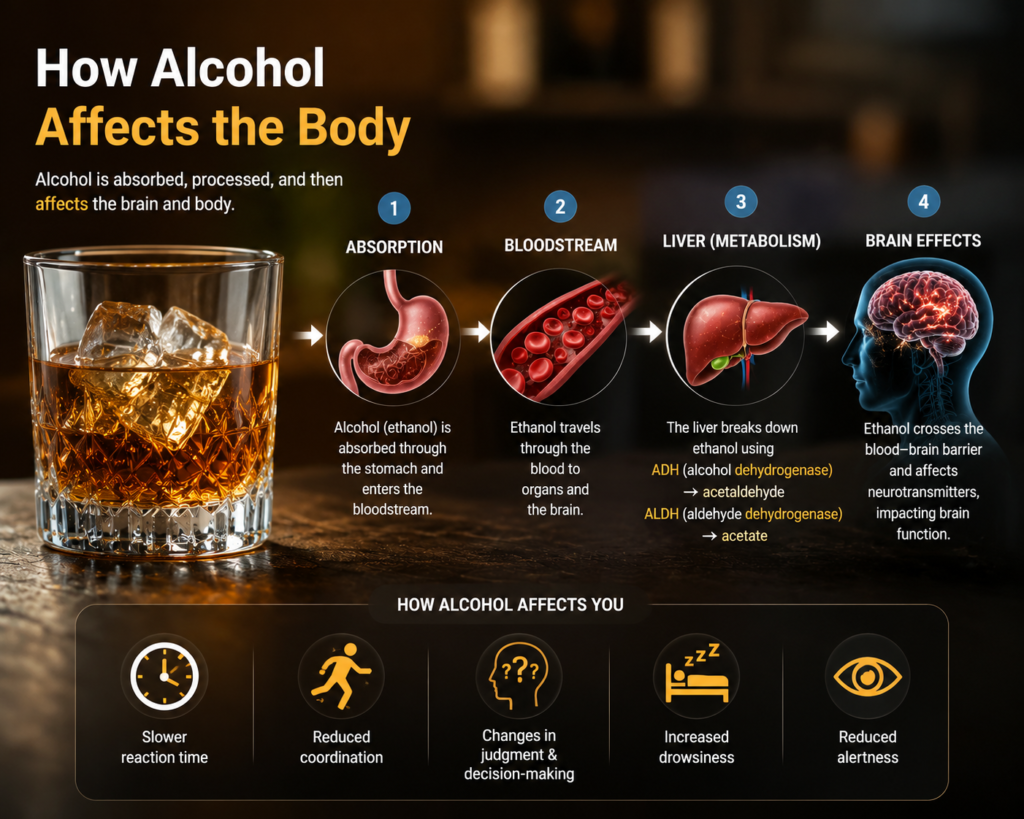
Alcoholic beverages contain ethanol, a psychoactive compound produced through fermentation or distillation processes. After consumption, ethanol is absorbed through the digestive system and enters the bloodstream, where it can travel throughout the body.
| The body primarily processes ethanol through the liver using enzymes such as:Alcohol dehydrogenase (ADH) — converts ethanol into acetaldehydeAldehyde dehydrogenase (ALDH) — converts acetaldehyde into acetate |
The speed at which alcohol is processed can vary depending on several factors, including genetics, metabolism, body composition, and the amount consumed.
Unlike many beverage ingredients, according to the National Institute On Alcohol Abuse And Alcoholism, ethanol directly affects brain function because it can cross the blood-brain barrier and influence communication between nerve cells.
🧠 Alcohol and the Central Nervous System
Alcohol is classified as a central nervous system depressant.
Rather than stimulating brain activity, it slows communication between nerve cells by influencing several neurotransmitter systems, particularly gamma-aminobutyric acid (GABA) and glutamate pathways.
| ⚡ As per the (NIH) Alcohol can affect the brain in several ways, including: Slower reaction timeReduced coordinationChanges in judgment and decision-makingIncreased drowsinessReduced alertness |
These neurological effects are one of the primary reasons researchers examine how alcohol may interact with other substances that also influence brain signaling.
How Do Kava Shots Interact With the Body?
Unlike alcohol, Kava does not contain ethanol. Instead, researchers focus on the activity of naturally occurring Kavalactones.
Although scientists continue studying exactly how these compounds work, several neurological pathways have been identified as areas of interest.
The Role of Kavalactones in Kava Shots
More than a dozen different kavalactones have been identified within the Kava plant, with six considered the major active compounds.
Researchers believe these compounds contribute to Kava’s biological activity by interacting with various signaling pathways in the nervous system rather than acting through a single mechanism.
| 👉 The exact composition of Kavalactones can also vary depending on:The Kava cultivar usedWhich parts of the plant are processedExtraction methodsManufacturing processes |
This variation is one reason why scientists evaluate different Kava products separately during research.
⚠️ What Happens When You Mix Kava and Alcohol?
By now, you know how alcohol and Kava work individually. But what happens when they’re taken together?
The honest answer is that research is still limited. There aren’t enough studies on the effects of mixing Kava and alcohol. However, because both substances can affect the central nervous system, most medical references recommend avoiding the combination as a precaution.
Here’s What Researchers Are Concerned About
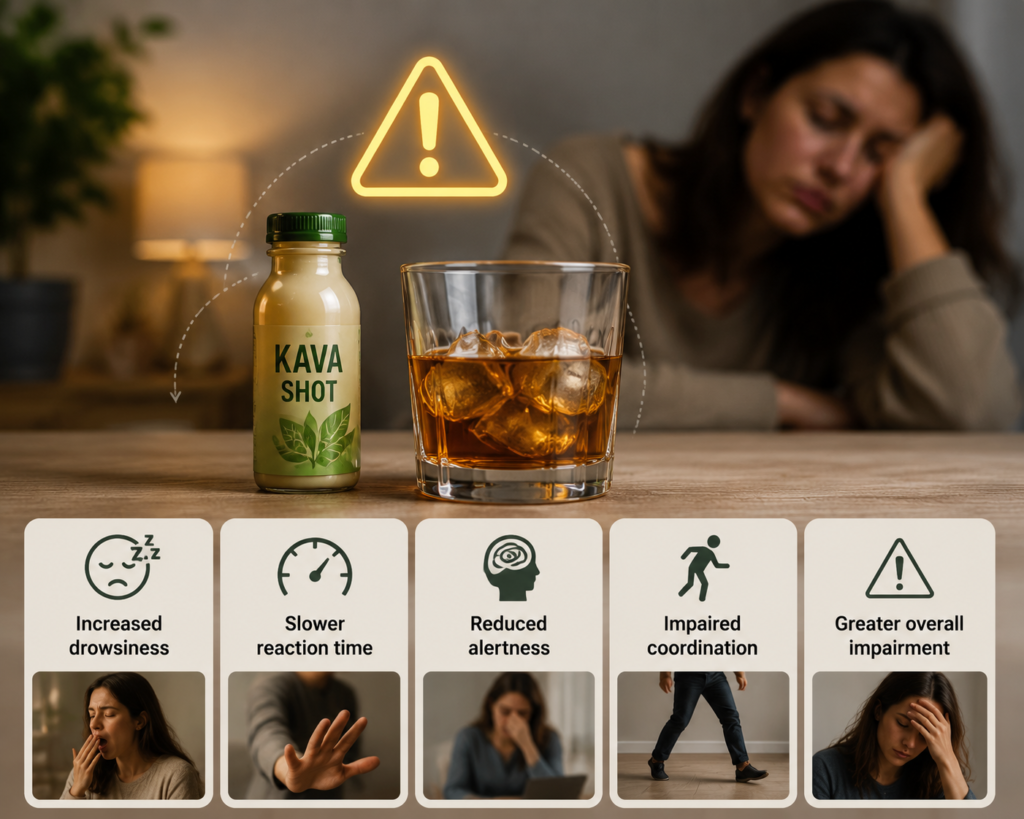
When Kava and alcohol are consumed together, researchers believe there may be a greater chance of experiencing:
| Increased drowsiness – You may feel sleepier than expected.Slower reaction time – Your responses and reflexes could become delayed.Reduced alertness – Staying focused or attentive may become more difficult.Impaired coordination – Activities that require balance or precision, such as driving, can become riskier.Greater overall impairment – The combined effects may be stronger than either substance alone. |
Why Doesn’t Everyone Experience the Same Effects?
There isn’t a single answer because several factors can influence how the body responds, including:
- How much alcohol was consumed
- The strength and formulation of the Kava shot
- Your age, body weight, and metabolism
- Existing medical conditions
- Whether you’re taking medications or other supplements
Because these factors vary from person to person, researchers cannot predict exactly how someone will respond to mixing alcohol and Kava.
Can You Drink Kava and Alcohol on the Same Day?
⚠️ No, you should not drink Kava and alcohol on the same day!
Taking Kava and alcohol on the same day, even hours apart, is not automatically “safe” just because they weren’t consumed at the same time.
Both substances can remain active in the body for several hours. While the exact duration varies between individuals, research suggests that Kavalactones and alcohol are processed at different rates, meaning their effects may still overlap depending on factors such as metabolism, the amount consumed, liver function, and the specific Kava product.
Why There Isn’t a Recommended Waiting Period
One of the biggest challenges is that no scientifically established waiting period currently exists between drinking alcohol and taking Kava.
This is because researchers still don’t have enough clinical evidence to determine:
- How many hours should alcohol and Kava be?
- Whether spacing them apart significantly reduces the chance of interaction.
- Whether different Kava formulations affect the timing differently.
Alcohol and Kava Shots: Understanding the Liver Health Debate
When people ask, “Why can’t you mix Kava shots and alcohol?” Liver health is usually part of the conversation.
That’s because the liver processes both alcohol and Kava shots. While this doesn’t automatically mean they’ll damage the liver when taken together, it does explain why healthcare professionals recommend caution—especially since research on combining the two is still limited.
Why Did Kava Raise Liver Health Concerns?
Kava first came under scrutiny in the early 2000s after a small number of reports linked certain kava products to liver-related problems. As a result, several countries temporarily restricted or suspended the sale of some Kava supplements while researchers investigated the issue.
⚡ Common contributing factors included:
| Poor-quality or highly concentrated Kava extractsUse of non-traditional parts of the Kava plantExisting liver conditionsAlcohol consumption alongside KavaCertain prescription medications |
Because of these variables, researchers have not concluded that traditionally prepared Kava alone is responsible for liver injury in healthy individuals. Instead, current evidence suggests that product quality, preparation methods, and individual health factors all matter.
Why Does Alcohol Make the Discussion More Important?
The liver primarily breaks down alcohol. Since the liver is also responsible for processing compounds found in Kava, researchers continue to study whether using both together places additional stress on the organ.
At this time:
- There is no strong clinical evidence proving that everyone who combines Kava and alcohol will develop liver problems.
- There is also not enough evidence to confirm the combination is risk-free.
Because of this uncertainty, many medical references recommend avoiding Kava and alcohol together, particularly for people who:
- Have existing liver conditions.
- Regularly consume alcohol.
- Take medications that affect liver function.
Still Have Doubts About Alcohol And Kava Shots? Read These FAQs
Are Kava Shots Safer Than Alcohol?
Kava and alcohol are different substances with different safety considerations, so one cannot be considered universally “safer” than the other. Their risks depend on factors such as product quality, individual health, and how they’re consumed.
What Happens If You Mix Kava And Alcohol?
Mixing Kava and alcohol may increase drowsiness, slow reaction time, and impair coordination because both can affect the central nervous system. Since research on their combined use is limited, health authorities generally recommend avoiding the combination.
Does A Kava Shot Contain Any Alcohol?
Most Kava shots are marketed as non-alcoholic and do not contain ethanol. However, it’s always a good idea to read the product label, as ingredients can vary between brands.
Is It Bad To Mix Kava And Alcohol?
Yes, it is generally considered a bad idea to mix Kava and alcohol. Although there isn’t enough research to define the exact risks, experts advise against combining them due to the potential for additive effects and the lack of established safety data.
Can You Drive After Taking A Kava Shot?
It’s best to avoid driving after taking a Kava shot, as it may reduce alertness or slow reaction time in some individuals. Wait until you know how it affects you before operating a vehicle or heavy machinery.
Are Kava Shots Legal? Does A Kava Shot Contain Any Alcohol?
Kava shots are legal in many countries and U.S. states, but regulations can vary depending on where you live. Always check your local laws and purchase products from reputable manufacturers.
Is Kava Shot Harder Than Alcohol On The Liver?
Current research does not show that Kava shots are harder on the liver than alcohol. However, because both involve liver metabolism and research on Kava is still evolving, experts recommend using caution, especially if you have a liver condition or regularly consume alcohol.
Disclaimer: This article is for informational purposes only and does not provide medical advice. The information is based on available research about kava, alcohol, and their potential interactions. Research on combining kava and alcohol is still limited, and individual responses may vary. Consult a qualified healthcare professional before combining kava, alcohol, supplements, or medications. Always follow guidance from trusted health authorities.